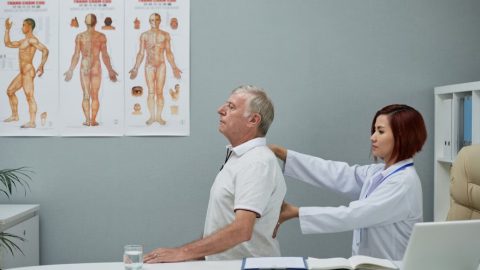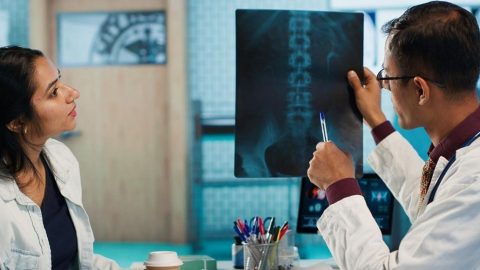

If you just got diagnosed with a herniated disc, you’re probably scared surgery is your only option. We hear this fear constantly from our Orlando patients.
Here’s the good news. Most herniated discs get better without an operation. Surgery is real, and sometimes it’s the right call, but it’s not the first step for most people.
We focus on interventional pain management for herniated discs here in Orlando. Our goal is to help your body heal on its own whenever possible. Surgery stays on the table only when nothing else works or when your safety demands it.
What Is a Herniated Disc?
Your spine has soft cushioning discs between each vertebra. A herniated disc happens when the soft inner gel pushes through a crack in the tougher outer layer.
That bulging material can press on nearby spinal nerves. The result is pain, numbness, tingling, or weakness that often travels down an arm or leg. Some people feel it in their lower back only. Others feel it shoot straight down to their foot.
According to the National Institute of Neurological Disorders and Stroke, herniated discs most commonly affect the lower back and neck. Age, repetitive lifting, and sudden strain all raise your risk.
When Does Non-Surgical Herniated Disc Treatment Work?
Conservative herniated disc treatment works for the vast majority of patients. According to the American Academy of Orthopaedic Surgeons, most people improve within four to six weeks using non-surgical care alone. That’s a short window compared to recovery from surgery.
Here’s what effective non-surgical treatment usually includes:
- Physical therapy to strengthen supporting muscles and improve mobility
- Anti-inflammatory medications to reduce swelling around the nerve
- Epidural steroid injections for targeted pain management for herniated disc symptoms
- Activity modification to avoid movements that worsen nerve irritation
- Ongoing pain management to keep you functional while you heal
We offer interventional pain management treatments around your specific symptoms. A slipped disc in your neck needs a different approach than a bulging disc in your lower back. Response to treatment, not guesswork, guides every decision we make.
Many patients tell us they expected a quick surgical fix. Instead, they leave our office with a plan that actually addresses the root cause of their nerve compression.
When Might Herniated Disc Surgery Be Recommended?
Herniated disc surgery isn’t common, but it’s necessary in specific situations. We want you informed, not alarmed, about when this conversation happens.
Surgery becomes a serious option when:
- Pain persists after weeks of consistent treatment
- Muscle weakness gets progressively worse instead of improving
- Nerve compression severely limits your ability to work or move
- You lose control of your bladder or bowel function
That last one is a true medical emergency. Loss of bladder or bowel control from a herniated disc is called cauda equina syndrome. If this happens to you, seek emergency care immediately. Don’t wait for a scheduled appointment.
Outside of that emergency scenario, surgery gets considered only after conservative options haven’t given you relief. We never rush a patient toward the operating room.
How Doctors Decide Between Pain Management Treatment And Herniated Disc Surgery
This decision isn’t a coin flip. Doctors weigh several concrete factors before recommending herniated disc surgery over continued non-surgical care.
Key factors include:
- MRI findings showing the exact location and severity of the herniation
- A neurological exam checking reflexes, strength, and sensation
- How long you’ve had symptoms, since chronic back pain behaves differently than acute pain
- Your response to previous treatments like physical therapy or injections
- Whether nerve symptoms are stable, improving, or getting worse
A disc that’s mildly bulging with occasional sciatica gets treated very differently than one causing rapid nerve damage. We use imaging and exam findings together, never one in isolation.
This is exactly why cookie-cutter treatment plans fail patients. Your MRI tells part of the story. Your daily symptoms tell the rest.
Why Early Evaluation Matters
Waiting it out sounds tempting when you’re hoping the pain just disappears. Unfortunately, delaying treatment can sometimes let nerve symptoms progress further than they needed to.
Early evaluation gives you options. It lets us catch nerve compression before it causes lasting weakness. It also means starting pain management sooner, so you’re not stuck suffering for months.
If you’re experiencing persistent numbness, tingling, or leg pain, seeking evaluation for herniated disc treatment in Orlando can help determine your best path forward. We’ll check whether conservative care fits your case or whether a surgical referral makes sense.
Spinal health isn’t something to gamble with. A short evaluation now can save you months of guessing later.
The Bottom Line on Herniated Disc Treatment
Most patients start, and finish, their recovery with non-surgical care. Physical therapy, medication, and targeted injections resolve symptoms for the majority of people we treat.
Herniated disc surgery exists for specific reasons: progressive weakness, unrelenting pain, or emergency nerve compression. It’s a tool we use when it’s genuinely needed, not a default answer.
An individualized plan, built from your MRI, your exam, and your response to treatment, gives you the clearest path to relief. That’s the approach we bring to every patient walking through our Orlando office.
Frequently Asked Questions
Can a herniated disc heal without surgery?
Yes. Most herniated discs improve with conservative treatment such as physical therapy, medication, and structured pain management within four to six weeks, according to the American Academy of Orthopaedic Surgeons.
How do I know if I need herniated disc surgery?
Surgery may be recommended if severe pain continues despite weeks of conservative treatment, muscle weakness keeps worsening, or nerve compression significantly limits your daily activities and mobility.
What’s the difference between a bulging disc and a herniated disc?
A bulging disc extends slightly beyond its normal space but keeps its outer layer intact. A herniated disc has a crack in that outer layer, allowing inner material to push through and press on nerves.
How long does an epidural steroid injection provide relief for a herniated disc?
Relief varies by patient, but many people experience reduced inflammation and pain for several weeks to a few months, giving the disc time to heal while staying active in physical therapy.
Can lifting heavy objects cause a herniated disc even if I don’t feel pain right away?
Yes. Herniated discs can develop gradually from repetitive strain or a single heavy lift, and symptoms like numbness or tingling sometimes appear days or weeks after the initial injury.